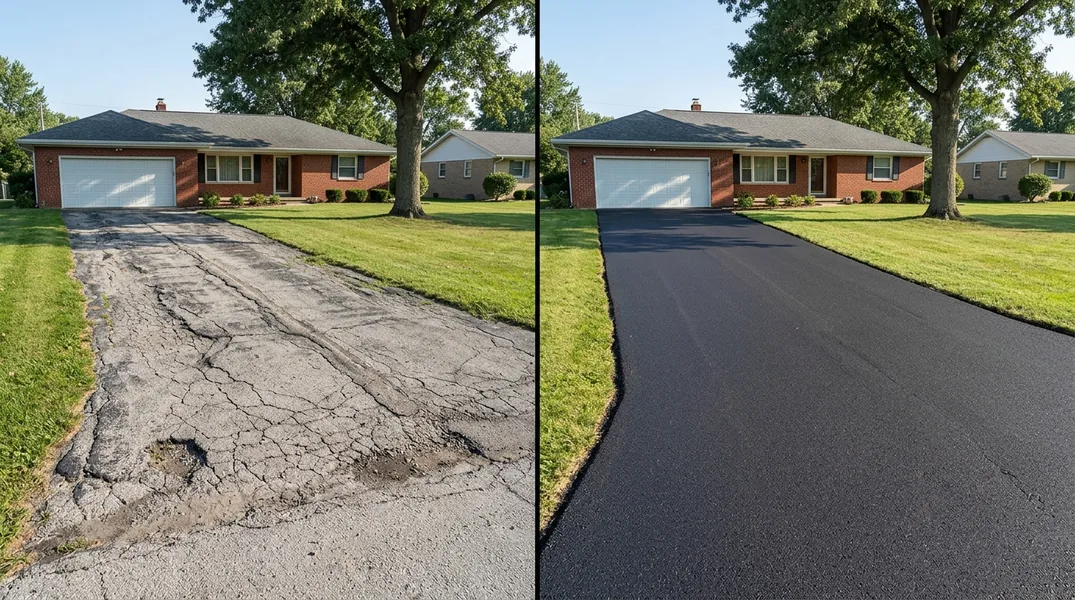
Understanding Freeze-Thaw Damage: The Silent Destroyer of Lafayette Driveways
Every spring, Lafayette homeowners wake up to find their driveways buckled, cracked, and heaving. The culprit isn't poor installation or cheap materials, though those certainly don't help. The real enemy is the freeze-thaw cycle that Indiana's climate inflicts relentlessly from November through March. When water infiltrates the base layers of your asphalt and the soil beneath, it expands as temperatures drop below freezing. This expansion pushes your driveway upward, sometimes by several inches, creating what's called heave.
The freeze-thaw process repeats dozens of times each winter season. Water seeps into microscopic cracks and the porous stone base layer, freezes overnight, expands with tremendous force, and then thaws during warmer days. Each cycle weakens the bond between asphalt layers and the compacted base. By spring, your driveway has been internally stressed and damaged in ways that may not be immediately visible. The damage compounds year after year, which is why a five-year-old driveway that was installed poorly can suddenly look twenty years old.
Why Proper Base Preparation Prevents Spring Heave
The foundation of any durable driveway is what lies beneath the asphalt. A properly prepared base layer, typically four to six inches of compacted gravel or crushed stone, acts as a drainage system that prevents water from pooling under your pavement. When contractors cut corners during Asphalt Driveway Paving & Installation, they often skip proper compaction or use insufficient base depth. This is one of the most common ways the leftover asphalt scam manifests. Dishonest contractors may tell you that your existing base is sufficient when it clearly isn't, or they'll use recycled asphalt millings as a base instead of fresh stone, which compacts poorly and retains moisture.
A quality base also needs proper grading and drainage channels to direct water away from your driveway and toward storm drains or natural drainage areas. Without this, water naturally migrates toward the lowest point, which is often directly under your asphalt. When you're evaluating how to choose a paving contractor, always ask about their base preparation process. Request details about compaction specifications, base material sourcing, and drainage plans. Legitimate contractors will provide written specifications and explain why each step matters. If a contractor glosses over the base or suggests skipping steps to reduce pricing, you've encountered one of the common driveway paving scams that plague homeowners.
The Role of Asphalt Quality and Seal Coating in Freeze-Thaw Protection
Not all asphalt is created equal. The quality of the mix design, the grade of binder used, and the size distribution of aggregate all affect how well your driveway withstands freeze-thaw cycles. Cheaper asphalt mixes may use lower-quality binders that become brittle in cold weather, making them more susceptible to cracking. When water enters through these cracks, the damage accelerates. Premium asphalt mixes use better binders and are properly heated and compacted, creating a denser surface that resists water infiltration.
Seal coating is your driveway's first line of defense against water penetration. A quality seal coat fills surface pores and creates a protective barrier that prevents water from seeping into the asphalt. Without seal coating, your new driveway begins absorbing water from day one. Most contractors should recommend seal coating within six months of installation, and then every two to three years thereafter. If a contractor tells you seal coating is optional or unnecessary, they're not prioritizing your driveway's longevity. Seal coating is an inexpensive investment compared to the cost of Driveway Repair or full replacement.
Questions to Ask Your Paving Contractor About Freeze-Thaw Protection
When you're ready to invest in Asphalt Driveway Paving & Installation, you need to ask the right questions to ask paving contractor to ensure they understand Indiana's climate challenges. Start by asking how they prepare the base layer and what compaction standards they follow. Ask whether they'll provide a written specification sheet that details base depth, material type, compaction percentages, and drainage plans. A reputable contractor will welcome these questions and provide detailed answers.
Next, ask about the asphalt mix design they'll use. Will it be a standard mix or a premium mix designed for cold climates? What's the binder grade, and why did they choose it? Ask about their seal coating recommendation and whether it's included in the estimate or quoted separately. Finally, ask for references from customers whose driveways have survived at least three winters. Speaking with homeowners who've experienced spring thaw with the contractor's work is invaluable. Avoid contractors who seem evasive about these topics or who pressure you to make a quick decision. The best contractors are confident in their methods and happy to explain them.
Recognizing and Avoiding Driveway Paving Scams in West Lafayette and Beyond
The asphalt industry unfortunately attracts unscrupulous operators who exploit homeowners' lack of technical knowledge. The leftover asphalt scam is particularly common in spring, when contractors claim they have excess material from a job site and can offer you a steep discount if you act immediately. While legitimate overages do occur, this tactic is often used to pressure you into accepting inferior material or skipping necessary preparation steps. Legitimate contractors maintain transparent pricing and never pressure you into rushed decisions.
Another red flag is contractors who offer prices dramatically below market rates without explaining why. If you get three estimates and one is 30 percent cheaper than the others, ask why. Is it because they're using recycled asphalt instead of virgin material? Skipping seal coating? Using a thinner asphalt layer? The cheapest option rarely provides the best value when you consider that your driveway must survive Indiana winters. Always get detailed written estimates that specify material quality, layer thickness, base preparation, and warranty terms. When you're ready to move forward with a trustworthy contractor, contact Lafayette Asphalt Paving at (765) 523-8939 or request a free estimate to discuss your project.
When Freeze-Thaw Damage Occurs: Repair vs. Replacement
If your driveway is already showing signs of heave damage, buckled sections, or widespread cracking, you face a decision between repair and replacement. Minor damage from a single harsh winter might be addressed through Pothole Repair & Asphalt Patching or Asphalt Resurfacing & Overlay. However, if the damage is structural, meaning the base layer has failed or the driveway is heaving significantly, patching won't solve the problem. Water will continue to infiltrate through the damaged areas, and the heave will worsen each winter.
A full replacement allows you to start fresh with proper base preparation, quality materials, and correct installation techniques that account for Indiana's climate. While replacement represents a larger upfront investment, it provides a long-term solution and peace of mind. The lifespan of a properly installed driveway is typically 15 to 20 years, making the annual cost quite reasonable. If you're uncertain whether your driveway can be repaired or needs replacement, Lafayette Asphalt Paving can assess the damage and recommend the most cost-effective solution. Call (765) 523-8939 or visit our website to request a free estimate and get expert guidance on your specific situation.
Looking for a professional asphalt paving contractor in Lafayette? Lafayette Asphalt Paving responds fast for all your asphalt paving needs.
Get a Free Quote