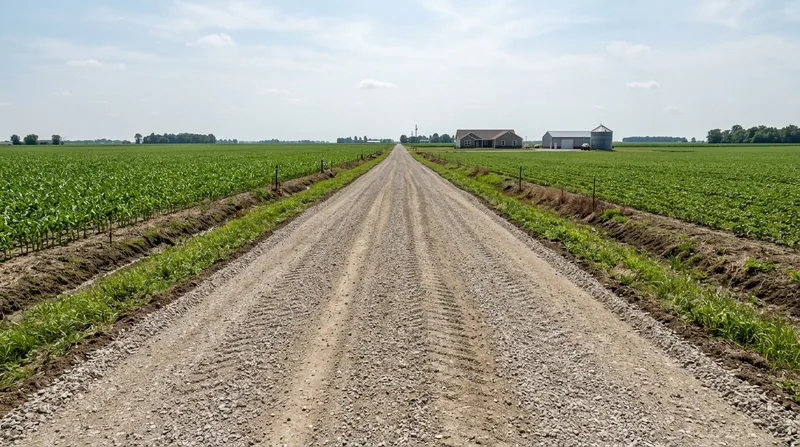




Gravel driveways across Warren, Fountain, and Carroll counties face a common problem: the clay-rich glacial till subgrade underneath won't drain on its own, and central Indiana's freeze-thaw winters make that worse every year. Water pools on the surface, the base heaves, ruts form, and what should be a solid lane becomes a muddy mess by spring. Gravel driveway installation and grading solves that by reshaping the surface to shed water, adding compacted crushed stone, and building the crown and slope that keeps moisture moving away from the structure. Lafayette Asphalt Paving has been grading and installing gravel lanes since 2009. We work across the rural and acreage properties of this region, where long private drives and farm lanes are the rule, and we understand the specific challenge that the till plain presents. A properly graded gravel drive with the right stone compaction holds for years; a flat or poorly drained one fails in the first heavy rain. We start with a site visit, measure the lane, specify the tonnage and stone grade, and build it right the first time. Call us for a free estimate.
Why Gravel Driveway Installation and Grading Matters in Lafayette and the Surrounding Counties
The soil beneath most private driveways and farm lanes in Warren, Fountain, Carroll, and Clinton counties is the same: glacial till, clay-heavy, and naturally poor-draining. When rain falls on a flat or crowned-the-wrong-way gravel surface, it sits. Freeze-thaw cycles in winter then heave the base, crack the surface, and open ruts that collect more water. Without proper grading and compaction, a gravel lane deteriorates faster than most homeowners expect, especially on acreage properties where the drive sees seasonal traffic and weather exposure. The fix is not just adding more gravel. It is reshaping the surface to a proper crown or slope, using the right stone size and gradation, and compacting it so it binds and drains. Done right, a gravel drive can last five to seven years or more before needing a refresh; done wrong, it fails in the first spring thaw.
- We assess drainage patterns and subgrade condition before any stone is placed, so the lane sheds water instead of holding it.
- We remove old, compacted, or contaminated material if the base is too degraded to work with, and we replace it with clean, compacted subbase.
- We specify crushed stone by size and quantity, and we compact each lift so the surface binds and resists rutting under vehicle weight.
- We crown or slope the surface to shed water away from the centerline and toward the shoulders, following the natural terrain where possible.
- We grade the shoulders and apron to prevent water from pooling at the edges or running back onto the lane.
Proper grading is the foundation of a gravel drive that performs. Without it, you are spending money on stone that will just move and settle into the same flat, wet mess.
Key info: Rural properties in Warren and Fountain counties often have long private drives that see seasonal use and little maintenance. A single grading and stone installation, done to spec, can buy you years of solid performance. Call (765) 523-8939 for a no-cost site visit and tonnage estimate.
For more on how we prepare surfaces for long-term durability, see our work on private road and HOA paving.
How We Grade and Install Gravel Driveways in Lafayette: Step-by-Step
The process starts with a clear understanding of where water needs to go and what the subgrade can support. We visit the site, walk the lane, measure the length and width, and look at how water currently moves (or doesn't move) across the surface. We then plan the work in stages: remove or rework the old base if needed, establish the crown or slope, add stone in lifts, and compact each layer so it binds. A gravel lane is not a pile of stone dumped and spread. It is a engineered surface built to drain and hold shape under traffic.
- We mark the centerline and establish the crown or cross-slope so water sheds to the edges and away from the structure.
- We remove any old, rutted, or contaminated material down to solid subgrade, or we proof-roll the existing base to confirm it can support new stone.
- We place and compact a compacted subbase layer (typically 4 to 6 inches of crushed limestone or recycled asphalt millings) to create a stable, draining foundation.
- We add the wearing course (typically 2 to 3 inches of crushed stone, size 57 or similar) and compact it until it binds and resists movement.
- We fine-grade the final surface and verify drainage by observing water flow during or after rainfall or by running water across the crown to confirm runoff direction.
The result is a lane that sheds water, resists rutting, and performs through multiple seasons of freeze-thaw and traffic.
Example: A half-mile private lane in Delphi serving a farm property had settled and rutted over ten years, with standing water after every rain. We removed the old material, re-graded to a 2% slope away from the property, added six inches of compacted base and three inches of wearing stone, and compacted the whole thing. Three years later, the lane still sheds water cleanly and shows no rutting. That is the difference between a pile of gravel and a built drive.
For properties considering a longer-term paved solution, see our guide to asphalt driveway paving and installation.
Gravel Driveway Installation and Grading Methods
| Approach | Description | Best for |
|---|---|---|
| Full Regrading and Stone Installation | Remove old material, regrade the subbase to proper slope, add compacted subbase and wearing course, and compact all lifts to specification. | Lanes that have settled, rutted, or lost crown; properties where drainage is poor or standing water is present. |
| Stone Overlay and Grading | Rework and recompact the existing base in place, then add new wearing-course stone and compact it to bind with the old material. | Drives where the subbase is still sound but has settled or lost compaction; seasonal maintenance refresh. |
| Recycled Asphalt Millings Base | Use reclaimed asphalt millings (RAP) as the compacted subbase layer, then top with virgin crushed stone for the wearing course. | Cost-conscious projects; drives where drainage is already adequate and the goal is to stabilize and refresh the surface. |
| Grading Only (No New Stone) | Regrade and recompact the existing stone in place to restore crown and drainage, without adding new material. | Drives where the existing stone is still present but has been displaced or flattened; emergency drainage repair. |
Each approach is chosen based on the condition of the subgrade, the volume of existing material, and the drainage goal. We assess the site and recommend the method that delivers the best performance for the budget.
Gravel Driveway Installation and Grading Cost in Lafayette: What to Expect
A gravel driveway installation and grading project typically starts at $950 for a short residential drive or a partial regrading, and can run considerably higher depending on the length of the lane, the volume of material to remove or add, and the condition of the subbase. A half-mile private road or a large acreage property with deep ruts and poor drainage will cost more, because the work involves more equipment time, more stone, and more compaction passes. The biggest cost drivers are the length of the drive, whether old material must be removed or can be reworked, and whether the subgrade is stable or needs significant preparation. A 200-foot residential lane with light ruts and an intact subbase might cost $1,200 to $1,800. A half-mile farm lane with poor drainage and deep settlement could run $3,500 to $6,000 or more. We always provide a written estimate with the tonnage of stone specified, the depth of each layer, and the total cost before any work begins. See our full pricing overview for more detail, and call (765) 523-8939 for a free site visit and estimate specific to your property.
Getting multiple estimates is smart. Different contractors may recommend different approaches, stone sizes, or compaction standards. A written estimate that includes tonnage and layer depth is the only way to compare fairly. Avoid any contractor who gives a price without visiting the site or who quotes only a per-ton rate without specifying the total tonnage.
Gravel Driveway Installation and Grading Near Me: What Lafayette Homeowners Should Know When Hiring a Contractor
The quality of your gravel drive depends almost entirely on how it is built. A contractor who skips the grading step, uses the wrong stone size, or under-compacts the layers will leave you with a surface that fails in the first heavy rain. Before you hire, verify that the contractor is fully insured, ask for references from recent gravel or private road projects, and confirm that they will provide a written estimate with tonnage and layer specifications. In Lafayette and surrounding counties, check with your township or county about any local requirements for private drive construction. While most rural gravel lanes do not require a permit, some properties have HOA restrictions or deed covenants that govern driveway material and appearance. Confirm these before work begins. Also verify that any excavation work will be preceded by an Indiana 811 utility locate, as hitting a buried line is a serious risk on any grading project. A local contractor with a local address and local knowledge of the till plain and the freeze-thaw cycle is your best assurance of a job done right. Contact us for a free estimate and to discuss your specific property and goals.
We have been serving Lafayette and the surrounding counties since 2009. We know the soil, the weather, and the failure modes that affect gravel drives in this region. We build to spec, we stand behind our work, and we are here year-round to answer questions and handle maintenance or repairs if they are needed.
Gravel Driveway Installation & Grading in Lafayette: Pricing Guide
| Service | Price | Details |
|---|---|---|
| Short residential drive regrading (under 150 feet) | Starting at $950 | Includes grading, compaction, and stone overlay; cost increases with subbase removal or deep rut repair |
| Standard residential to light commercial (150-300 feet) | Starting at $1,500 | Full regrading, compacted subbase, wearing course stone; includes site prep and verification of drainage |
| Long private road or acreage lane (300+ feet) | Starting at $2,800 | Larger equipment, multiple compaction passes, extended material delivery; exact cost depends on subgrade condition and slopes |
| Recycled asphalt millings base option | 10-15% savings over virgin stone | RAP subbase with virgin wearing course; suitable where drainage is adequate and cost is a priority |
| Travel and site visit | Included | No mileage charge or travel fee in Lafayette and surrounding Tippecanoe, Warren, Fountain, Clinton, and Carroll counties |
| Free estimate | No charge | Written estimate with tonnage and layer depth; response within 24 hours, no obligation to book work |
Indicative pricing, the exact cost depends on square footage, finish, and site access. Free personalized estimate within 24h at (765) 523-8939.


